
Denver commercial real estate has had its share of difficult headlines.
Office vacancy is still high, especially downtown. Remote and hybrid work have changed how companies use their space. Some downtown buildings are struggling, and concerns about public safety, homelessness, and the city’s core have made many people think Denver is having a tough time.
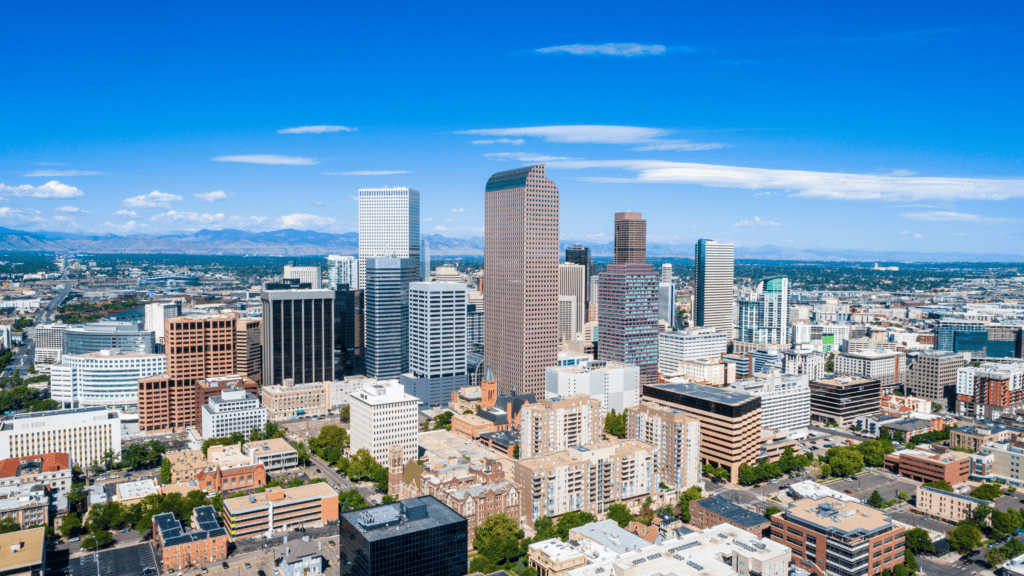
But there’s another side to the story: how people see Denver can become a real estate issue in itself.
That’s one reason why a new campaign called Denver. The Best Return on Life is drawing interest.
This week, a group of Denver business and civic leaders launched a $2.5 million campaign to shift the national conversation about the city. They want to highlight Denver’s economic opportunities, quality of life, and progress on big challenges. The campaign uses national media outreach, digital and social media advertising, public events, and partnerships with local businesses and cultural organizations to spread its message. The aim is to attract companies, talent, and investment by showing a fuller picture of Denver.
This matters for commercial real estate.
The San Francisco Example
Denver isn’t the first big city to realize that its reputation can affect its economy. In 2023, San Francisco business and civic leaders launched a $4 million campaign called It All Starts Here. The campaign came at a time when concerns about homelessness, drug use, retail closures, and public safety dominated national coverage.
Instead of ignoring those issues, the campaign broadened the story by highlighting San Francisco’s innovation, culture, economic role, and history. Its long-term impact is hard to isolate, but it showed how a city can push back on a one-sided national story without denying its problems.
A marketing campaign alone can’t fix commercial real estate problems. It won’t fill empty offices, bring companies back downtown, or reverse major shifts in office demand.
But a city’s reputation does affect decisions by businesses, employees, investors, developers, and visitors. When people’s views are much more negative than what’s really happening, that gap can have real economic effects.
Denver’s Numbers Are More Complicated Than the Headlines
Denver’s office market has faced some big challenges.
According to CBRE, downtown Denver’s office vacancy rate was 38.6% in the second quarter of 2026, which is high. That same quarter also saw the first positive net absorption since Q3 2024, with 66,000 square feet added. Downtown vacancy also dropped 20 basis points from the previous quarter, its first decline since Q3 2024.
Outside of downtown Denver, the situation looks a bit different.
The broader Denver office market saw 179,000 square feet of positive net absorption in Q2, its best quarter since the pandemic, according to CBRE. Vacancy fell slightly to 28.7%, and leasing activity was the highest since Q1 2022. Sublease space was also down 24.6% from a year ago. Investors are taking notice as well: 255 Fillmore in Cherry Creek sold for a record $941 per square foot. Downtown, Class A vacancy fell to its lowest level in five quarters, suggesting demand is concentrating in the best buildings while older, lower-tier properties continue to struggle.
CBRE’s midyear report says Denver’s commercial real estate fundamentals are stable or improving across sectors. The report also notes 6.5 million square feet of active tenant requirements at midyear, up 39% since early 2026.
That doesn’t mean Denver’s commercial real estate challenges are solved. But it does show the story is more complicated than just saying, “Denver CRE is struggling.”
Perception Matters to Commercial Real Estate
Think about how a company evaluates a potential new location. They consider things like rent, availability, incentives, taxes, workforce, transportation, infrastructure, and how easy it is to reach customers.
But they also think about questions that are harder to measure:
- Do our employees want to work here?
- Will we be able to attract talent?
- What will our clients think when they visit?
- Does this location support our company’s image and culture?
- Where do we believe this market will be in five or ten years?
Perception shapes how people answer those questions.
This is especially true for downtown real estate. An office building depends on what’s around it. Restaurants, shops, housing, transit, public spaces, entertainment, and foot traffic all shape what it’s like to be there. So, the neighborhood’s condition can affect how appealing the real estate is.
Changing the Story Doesn’t Mean Ignoring the Problems.
This is what makes the Denver campaign’s approach interesting. It highlights progress but also admits there’s still work to do. As campaign chair Matt Joblon told BusinessDen, PR and marketing alone don’t solve the problem.
Real efforts are happening now. For example, the Downtown Denver Development Authority is helping turn about 1.5 million square feet of office space into homes or mixed-use buildings. The city is also investing in infrastructure and economic development to support both downtown and the broader economy. Additional initiatives are underway, such as the Safe Outdoor Spaces program to address homelessness and efforts to increase downtown residential development through incentive programs. The Denver Police Department has also launched targeted safety patrols in key areas, and it is offering new small business grants to support local entrepreneurs. Together, these projects reflect a broad push to drive positive change across multiple fronts.
For people to really change their minds, there have to be real changes on the ground.
Marketing can encourage people to give Denver another look, but it can’t replace real investment, economic activity, public safety, infrastructure, or smart real estate planning. But once those things start to improve, it’s important to share that progress.
What This Means for Denver CRE
Denver’s commercial real estate market won’t recover overnight. Change happens building by building, neighborhood by neighborhood, and tenant by tenant.
Some properties will still face big challenges. Others will benefit from new tenant preferences, less new construction, or better neighborhoods. The recovery won’t look the same for every building or area. That’s why it helps to have a broader conversation about Denver.
For brokers, owners, and investors, this shift in narrative provides an opportunity to revisit marketing strategies, showcase recent improvements, and highlight building features that align with what today’s tenants want. Tailoring outreach to specific tenant types and actively participating in the city’s story can help drive leasing activity and investment as perceptions evolve.
Instead of asking whether Denver is “back,” the more productive questions are:
- Where is demand returning?
- Which properties are positioned to benefit?
- What types of space are tenants looking for?
- Which neighborhoods are building momentum?
- How can underutilized properties be repositioned?
And perhaps most importantly:
- What will Denver look like when today’s vacant or underutilized properties are put to better use?
These answers are far more helpful for real estate owners, investors, and businesses than asking whether Denver is thriving or struggling.
The Story Isn’t Finished
Denver’s commercial real estate market still has real challenges. High office vacancy, new ways of working, and the cost of updating older buildings won’t disappear just because the city’s story gets better.
But the opposite is also true.
A market can begin changing before the general perception of that market changes.
Recent data shows more leasing activity and stronger demand in some parts of Denver’s commercial real estate market. At the same time, Denver’s business community is working hard to show the rest of the country that the city is more than just its toughest headlines.
Changing Denver’s story means making sure people see the whole picture.
This matters for commercial real estate because while fundamentals drive the market, perception also shapes where people and companies decide to invest, work, and grow.
Denver’s future will be decided by what actually happens in the city. But telling Denver’s story honestly could help attract the right people as new opportunities arise.
References
- CBRE. (July 9, 2026). Denver Office Figures Q2 2026.
- CBRE. (July 15, 2026). Denver Downtown Office Figures Q2 2026.
- CBRE. (August 4, 2026). Denver 2026 U.S. Real Estate Market Outlook Midyear Review.
- Har, J. & Daley, H. (October 18, 2023) Civic group launches $4M campaign to boost embattled San Francisco ahead of global trade summit. Associated Press.
- Jackson, M. (September 23, 2026). Public-private campaign highlights Denver’s economic and quality of life gains. ColoradoBiz.
When you need expert help navigating the Colorado CRE landscape, contact us. We are here to help.